
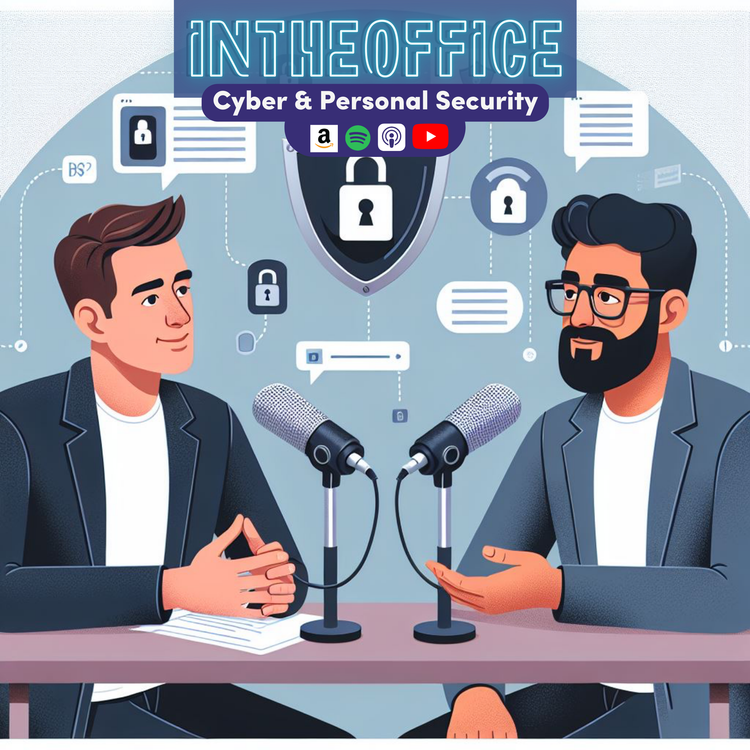
Bug Sweeping and Beyond: Cyber Security with Jon and G
Jon sits down with G from security and investigations firm Valkyrie to pull back the curtain on the world of cyber and physical security and it's every bit as James Bond as it sounds. From a bugged extension plug discovered in a hedge fund COO's office, to operatives tailgating into buildings in three-piece suits, this episode is a fascinating look at how vulnerable most businesses really are and how much of it comes down to culture rather than technology.
G breaks down the threats facing small and medium-sized businesses today, explains why the shift to hybrid working has quietly made us all more exposed, and makes a compelling case for starting your security journey from the ground up rather than jumping straight to the expensive stuff. There's also a sharp conversation about AI and what it means for phishing attacks. Spoiler: the days of spotting a dodgy email by its bad grammar may be numbered.
Guest: Gurpreet Thathy (G), Valkyrie Security & Investigations
Listen
Watch
Show Notes
What Valkyrie does:
- Cyber security and digital investigations
- Physical penetration testing and surveillance
- Human intelligence (HUMINT) and OSINT
- Bug sweeping (technical surveillance countermeasures)
- Crisis response and personal security
Key stories from the episode:
- A bugged extension plug found in a hedge fund COO's office containing a SIM card, microphone, and the ability to dial out anywhere in the world via GSM
- A physical pen test where an operative in a suit tailgated into a building by acting aggressively, the security guard backed down because he'd been shouted at by real executives before
- A desktop exercise where a client's entire incident response plan listed a contact who'd left 18 months earlier
The biggest threats to SMEs right now:
- Culture: the "it won't happen to me" mindset
- Hybrid working: home environments are far more relaxed and less controlled than offices
- Shared Wi-Fi, public networks, and co-working spaces
- Outdated systems that nobody wants to touch in case they break something
G's recommended first steps:
- Do a data audit, know where your data is before you try to protect it
- Start with the basics, look into the NCSC's Cyber Essentials certification (free to access, done annually)
- Build on that foundation gradually, think of it as a maturity curve, not a sprint
- Rehearse your incident response plan, and keep it up to date
Other topics covered:
- What VPNs actually do (and what they don't protect you from)
- Why MFA felt like a nuisance and is now just part of life
- The risks of patching and why some organisations stop doing it entirely after one bad experience
- AI and phishing, ChatGPT can write a flawless phishing email, removing one of the key ways people spot them
- Deep fakes, photo manipulation, and why G's wife and G couldn't be further apart on how they feel about AI photo editing
- The NHS still running Windows XP-era systems because updating them would break everything else
Key takeaway from G:
Lock your front door before you install an electric fence. Lay your foundations first, then build up. And once you get there, don't stop - the curve never ends.
Subscribe to Workplace Economies
Subscribe to be the first to know about new episodes and articles.
No spam. Unsubscribe anytime.
We collect your data in line with our privacy policy.