
I Replaced My Transcription Tool, Which Exposed a Bigger Problem
An afternoon experiment that accidentally backed up the point of my last article.
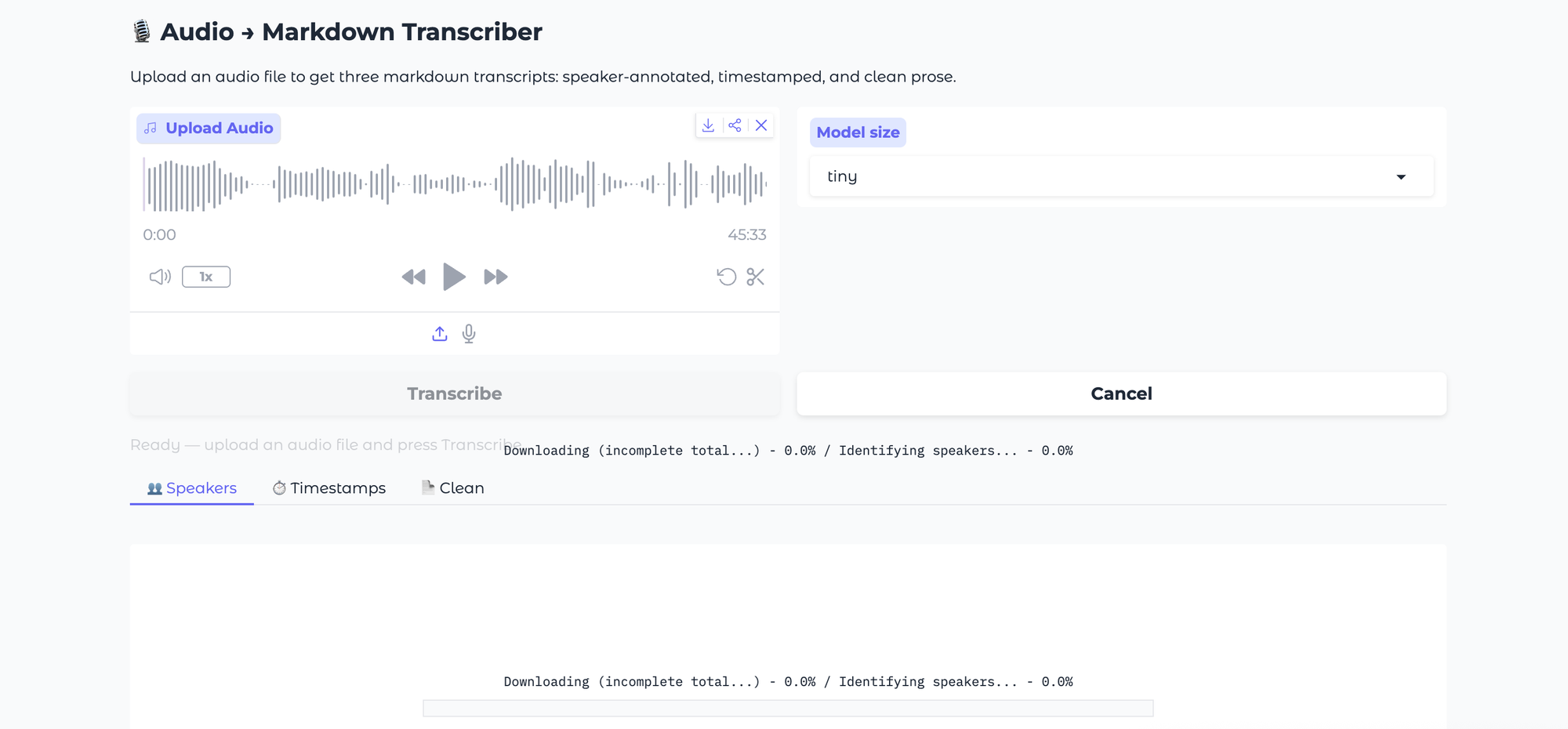
We recorded our first Workplace Economies podcast last week, and I needed a transcription. In the past, when we recorded podcasts we used a tool called Turboscribe to automate the transcription. It was a really good tool and pretty accurate, but it would still require a thorough read-through to check. It wasn’t very expensive, around £7.50 a month, but that’s still roughly £90 a year for one licence.
This time I wondered how easy it would be to build my own.
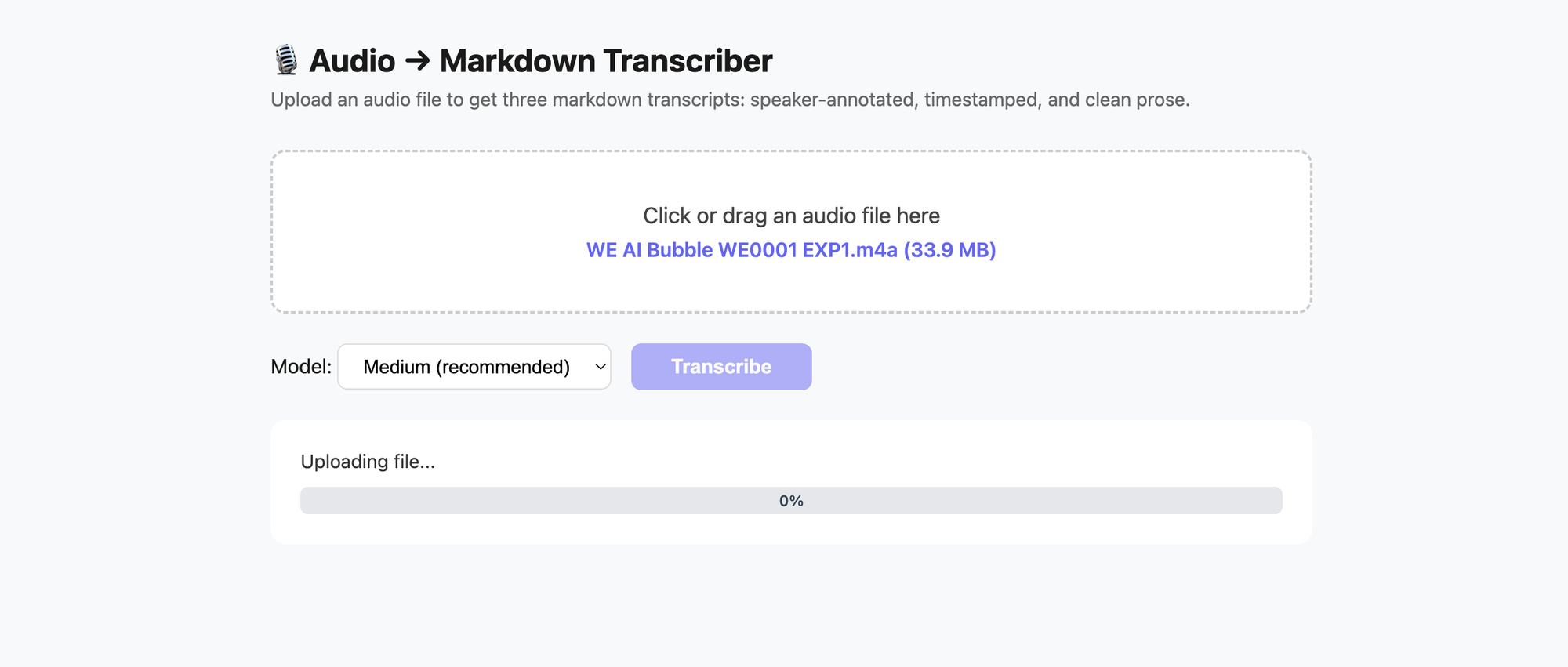
I’m afraid my concerns have been realised. It took one short prompt to build a working program.
It wasn’t pretty, and I did need to prompt again to get the right commands to get it started, but v1 still let me upload the m4a file and produced a markdown file which accurately transcribed the whole 45-minute conversation.
One prompt. Free. Done.
In The AI Bubble Nobody Sees Coming I told a story about a small business owner who builds her own CRM in a weekend instead of paying for HubSpot. My thinking is that when enough people start doing this across multiple software categories, the pricing power that SaaS companies depend on starts to crumble. I wrote that as a personal prediction of the future. My lived experience today proved it to be true.
In the interest of transparency, v1 needed a bit of work. I wanted to have better interface and to produce different outputs. That part (inevitably) got me into a slight rage spiral of repeated prompts and process errors that anyone who has spent time vibe-coding will recognise. But within a few hours I had a good workable system.
I could keep going to make it a product. Polish it up, stick it online, charge £2 a month and drastically undercut Turboscribe. But what’s stopping someone else doing the same thing and undercutting me? Maybe I should be open-sourcing it. But my needs are probably different to other people’s. And I don’t want to just add another subpar AI-generated thing out there.
Getting back to the point, £90 a year is not much for a business. However, most SMEs are running ten, twenty, thirty SaaS subscriptions. If even a third of those are replaced with a couple of hours and an AI subscription, the maths gets uncomfortable pretty quickly for those tool suppliers.
Of course there’s a flip side. Building a solution is one thing, but keeping it running with OS updates, model changes, or something quietly breaks in six months? That’s what Turboscribe’s subscription actually pays for. They employ people to worry about that stuff so I don’t have to.
My tool runs on my laptop. It’s not connected to the internet and there are no users to manage, no servers, no security patches. If it breaks, I can just prompt a new one. That argument about ongoing maintenance holds for complex, connected systems but not for simple internal tools focused on one job (even when it is a complex job).
This is the uncomfortable reality for every SaaS company sitting in the long tail of simple, single-purpose tools. Not Salesforce running a global enterprise. The Turboscribes. The niche utilities charging £10 a month for something an AI can build in an afternoon. They’re the ones I’m worried about.
I saved £90. But the fact that I could do it so easily, in one sitting, without really trying is the bit I can’t stop thinking about.
Subscribe to Workplace Economies
Subscribe to be the first to know about new episodes and articles.
No spam. Unsubscribe anytime.
We collect your data in line with our privacy policy.